What Is an Intensive Faith Based IOP and How Does It Work?
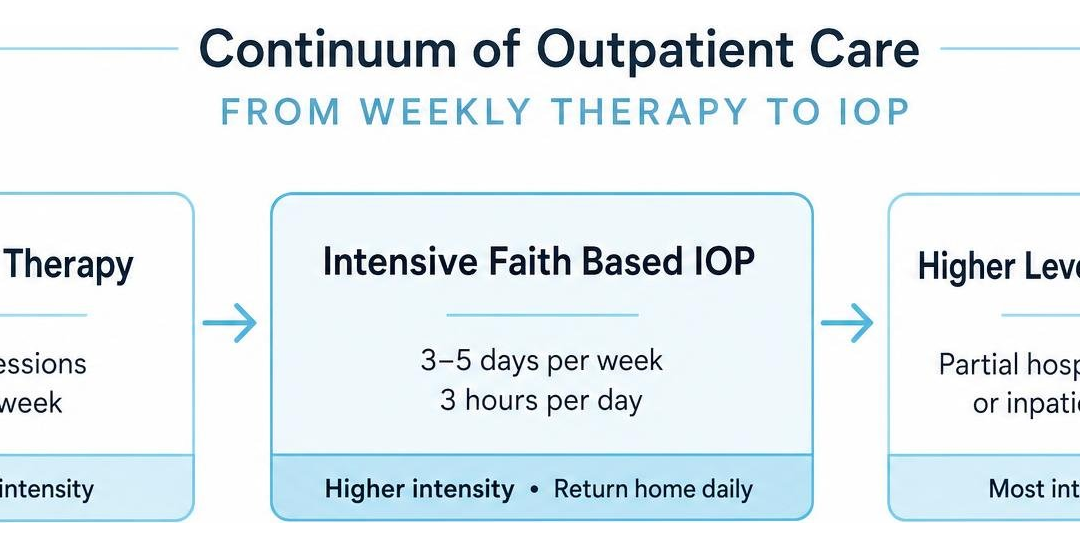
An intensive faith based IOP (Intensive Outpatient Program) provides a comprehensive level of care for individuals who need robust clinical and spiritual support while continuing to live at home. Unlike standard outpatient therapy—which might only meet for an hour or two once a week—an IOP provides a higher level of structure while allowing clients to return home every evening.
This model bridges the gap between weekly counseling and higher levels of care. Clients can maintain employment, attend school, or care for family members while actively engaging in a structured therapeutic environment. For a deeper look into these program dynamics, explore our In-Depth Guide to What Is an Intensive Outpatient Program and discover how our broader Outpatient Program options serve our Western Pennsylvania community.
Understanding the Structure of an Intensive Faith Based IOP
The defining feature of an intensive faith based IOP is its regular, multi-day schedule. Clients generally participate in treatment 3 to 5 days per week, attending sessions for 3 hours at a time, totaling 9 to 15 hours per week. Most clients participate in this level of care for 8 to 12 weeks, depending on their personal growth and recovery goals.
During these hours, clients engage in a well-balanced blend of therapeutic activities:
- Group Therapy: Small, compassionate group settings where clients share experiences, learn coping strategies, and encourage one another.
- Individual Counseling: One-on-one sessions with a licensed counselor to process personal challenges, trauma, and individual goals.
- Spiritual Growth & Reflection: Time dedicated to scripture reflection, group prayer, and learning how to apply Christian principles to everyday struggles.
- Life Skills & Relapse Prevention: Practical tools for emotional regulation, managing triggers, and building healthy daily habits.
To learn more about how we integrate faith and clinical tools, read about our Christian Intensive Outpatient Treatment.
Who Benefits Most from an Intensive Faith Based IOP?
An IOP is designed for individuals who need structured support to achieve or maintain sobriety but do not require 24/7 medical supervision. It is particularly well-suited for:
- Individuals stepping down from higher levels of care: Those who have completed medical detox or intensive programs and need a structured bridge as they transition back into daily community life.
- Those needing more support than traditional therapy: Individuals who find that a single weekly counseling session isn’t enough to prevent relapse or manage complex emotional challenges.
- People with strong home support: Individuals who live in a safe, sober home environment that supports their ongoing recovery journey.
- Believers seeking spiritual renewal: Someone in recovery who wants to strengthen their relationship with God while receiving evidence-based clinical care.
Review our guide on Making the Grade with IOP Program Requirements to evaluate if this level of care aligns with your family’s needs.
Blending Clinical Science with biblical Truth in Recovery
At Grace Recovery Services, we believe that clinical science and Christian faith are complementary forces in the healing process. Science helps us understand how the brain reacts to addiction and trauma, while faith addresses the core needs of the human spirit–hope, purpose, identity, and forgiveness.
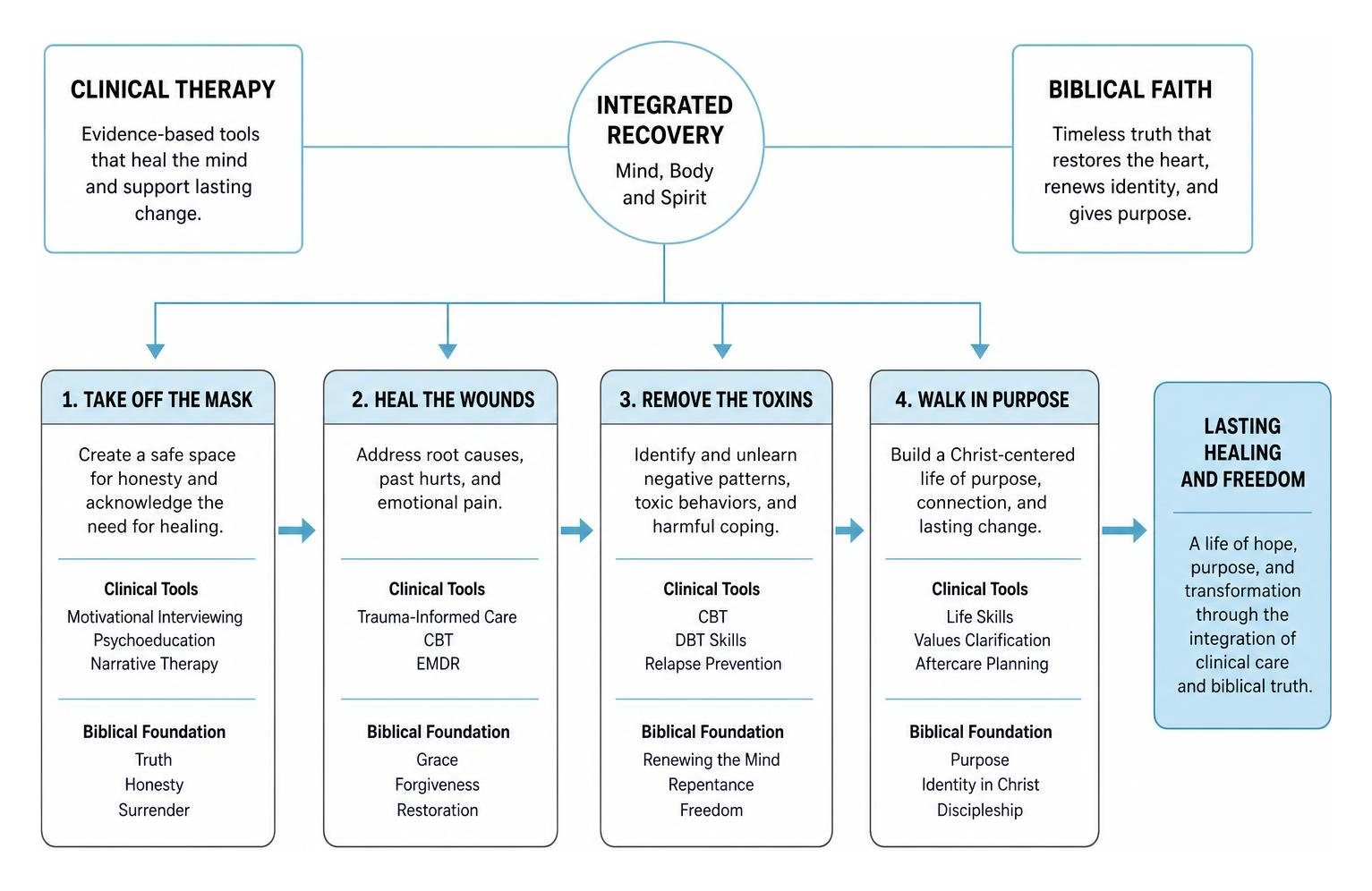
Our programs seamlessly combine evidence-based therapeutic practices–such as Cognitive Behavioral Therapy (CBT), Motivational Interviewing, and trauma-informed care–with deep spiritual truths. We walk clients through our Counseling Blueprint, which consists of four transformative stages:
- Take Off the Mask: Creating a safe, non-judgmental space where clients can drop pretense, be honest about their struggles, and acknowledge their need for healing.
- Heal the Wounds: Utilizing trauma-informed therapy and clinical tools to address root causes, past hurts, and emotional pain.
- Remove the Toxins: Identifying and unlearning negative thought patterns, toxic behaviors, and harmful coping mechanisms.
- Replace with Truth: Rooting personal identity in Christ, establishing healthy boundaries, and building a purpose-driven life based on biblical wisdom.
For more insights on this combined approach, see our article on Faith Integrated Recovery in Pittsburgh Where Science Meets Spirit and our overview of Faith-Based Outpatient Addiction Treatment.
Nurturing Mind, Body, and Spirit
Addiction and mental health struggles affect every dimension of a person’s life. A truly comprehensive recovery program must nurture the whole person:
- Mind: Cognitive behavioral techniques help reframe distorted thinking patterns, while mindfulness and stress-management skills quiet anxious thoughts.
- Body: We encourage physical wellness, sleep hygiene, and healthy habits that allow the physical body to heal from the effects of substance use.
- Spirit: Through prayer, scriptural reflection, and spiritual community, clients reconnect with their God-given identity, discovering that their past mistakes do not define their future.
Learn more about this approach in our Holistic Christian Addiction Help Faith-Based Recovery Guide.
Scripture and Relapse Prevention
Relapse prevention in a faith-based setting combines practical safety planning with spiritual truth. Clients learn to recognize personal triggers, manage emotional distress, and build practical boundaries. At the same time, they build a spiritual foundation using scripture as a source of strength during times of temptation.
Practicing spiritual disciplines–such as morning prayer, meditating on encouraging Bible verses, and leaning on a church community–helps clients replace old habits with lasting spiritual armor. To explore specific scriptural applications, consult A Practical Guide to biblical Sobriety Programs in Pittsburgh.
What a Typical Week Looks Like in Faith Outpatient Care

Structure and consistency are vital elements of early recovery. A typical week in an intensive faith based IOP provides a predictable routine that fosters accountability while honoring a client’s daily obligations at work or home.
Group Sessions, Counseling, and Prayer
On scheduled treatment days, clients gather in a warm, welcoming clinical setting in Western Pennsylvania. A regular schedule often looks like this:
- Welcome & Spiritual Check-In (15–30 mins): Opening prayer, reading a short devotion or Bible verse, and grounding the day in hope and community encouragement.
- Clinical Group Therapy (90 mins): Interactive group sessions led by licensed Christian counselors focusing on CBT skills, emotion regulation, trauma recovery, or relapse prevention strategies.
- Skill Application & Peer Sharing (45 mins): Breakout discussions where clients discuss practical ways to apply recovery tools in their everyday lives.
- Individual Counseling (Scheduled Weekly): Dedicated, confidential sessions with a primary counselor to work through personal challenges and track recovery progress.
This balance ensures that every client receives targeted clinical attention while building strong peer relationships. Read more about our community-focused options in Christian Addiction Recovery Pittsburgh.
Involving Loved Ones and Building Support Systems
Recovery does not happen in isolation, and family support can significantly improve long-term outcomes. Addiction often strains family dynamic relationships, creating fear, resentment, or miscommunication. Faith-based IOPs actively involve family members through family counseling sessions, educational workshops, and guidance on establishing healthy boundaries.
By introducing loved ones to the recovery process, families learn how to support their relative’s sobriety without enabling harmful behaviors. Clients are also encouraged to connect with local faith communities and recovery support groups across Pittsburgh, Penn Hills, and North Huntingdon. Discover more about local family support through our Penn Hills location.
Program Costs, Insurance Coverage, and How to Get Started

Taking the first step toward treatment can feel overwhelming, but navigating program enrollment and financial coverage is often much simpler than families expect.
Navigating Costs and Insurance Options
Because intensive outpatient programs allow clients to reside at home while attending scheduled care, they offer a highly practical and cost-effective approach while still delivering robust clinical programming.
Most major commercial insurance providers recognize the clinical effectiveness of IOPs and cover outpatient addiction treatment. Insurance benefits often cover group therapy, individual counseling, and family sessions. To learn more about navigating insurance benefits, read our Detailed Guide to Outpatient Programs.
Steps to Enroll and Next Actions
Getting started with Grace Recovery Services is a straightforward, confidential process:
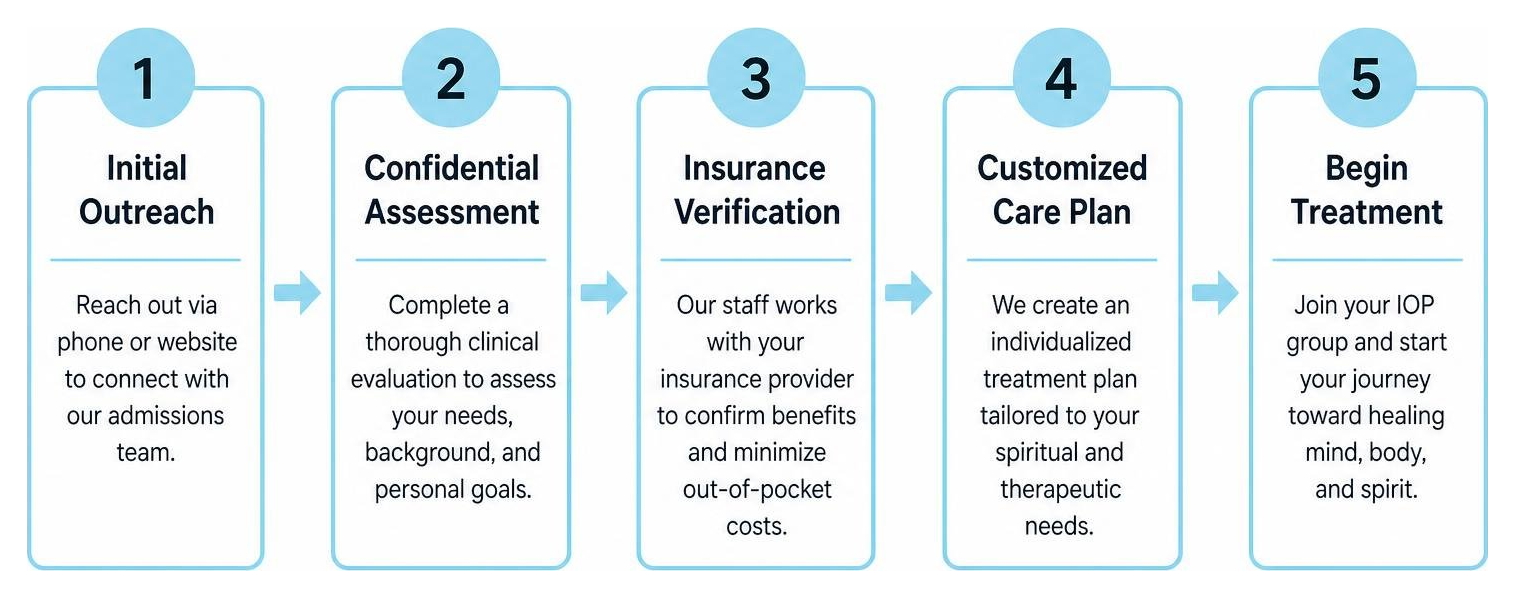
- Initial Outreach: Reach out via phone or website to connect with our admissions team.
- Confidential Assessment: Complete a thorough clinical evaluation to assess your clinical needs, background, and personal goals.
- Insurance Verification: Our staff works directly with your insurance provider to clarify your covered benefits and minimize out-of-pocket expenses.
- Customized Care Plan: We create an individualized treatment plan tailored to your specific spiritual and therapeutic needs.
- Begin Treatment: Join your IOP group and start your journey toward healing mind, body, and spirit.
For practical steps on finding care near you, explore 8 Practical Ways to Find Outpatient Rehab Near Me and learn more about our regional history via Faith-Based Recovery Pittsburgh.
Frequently Asked Questions About Faith-Based IOPs
How does a faith-based IOP differ from traditional outpatient therapy?
Traditional outpatient therapy typically consists of one 50-minute individual session per week. In contrast, an intensive faith based IOP provides 9 to 15 hours of treatment per week, combining group therapy, individual counseling, and spiritual practices like prayer and Bible reflection to offer a higher level of care and accountability.
How long does a typical faith-integrated program last each week?
Clients attend sessions 3 to 5 days per week, usually for 3 hours per day (9 to 15 hours total each week). Most clients remain in the program for 8 to 12 weeks before stepping down to standard weekly outpatient counseling.
Can I maintain my work and family commitments while enrolled?
Yes! Because IOPs operate on flexible daytime or evening schedules, clients continue living at home, working, going to school, and spending time with their families throughout treatment.
Conclusion
Finding the right balance of clinical expertise and spiritual support is one of the most important decisions you can make on the road to recovery. An intensive faith based IOP offers a safe, structured environment where you can step into real freedom from substance use without pausing your daily life.
At Grace Recovery Services, we serve individuals and families throughout Western Pennsylvania—including Pittsburgh, Penn Hills, North Huntingdon, and surrounding areas. Our compassionate team is dedicated to providing evidence-based, trauma-informed care that honors your faith and supports complete healing of mind, body, and spirit.
If you or a loved one are ready to take the next step toward restoration in Christ, we are here to walk beside you. Explore Our Comprehensive Outpatient Recovery Services today or contact our team to schedule a confidential assessment. Healing is possible, and you do not have to walk this road alone.