
Find Christ-Centered Recovery Support Near You
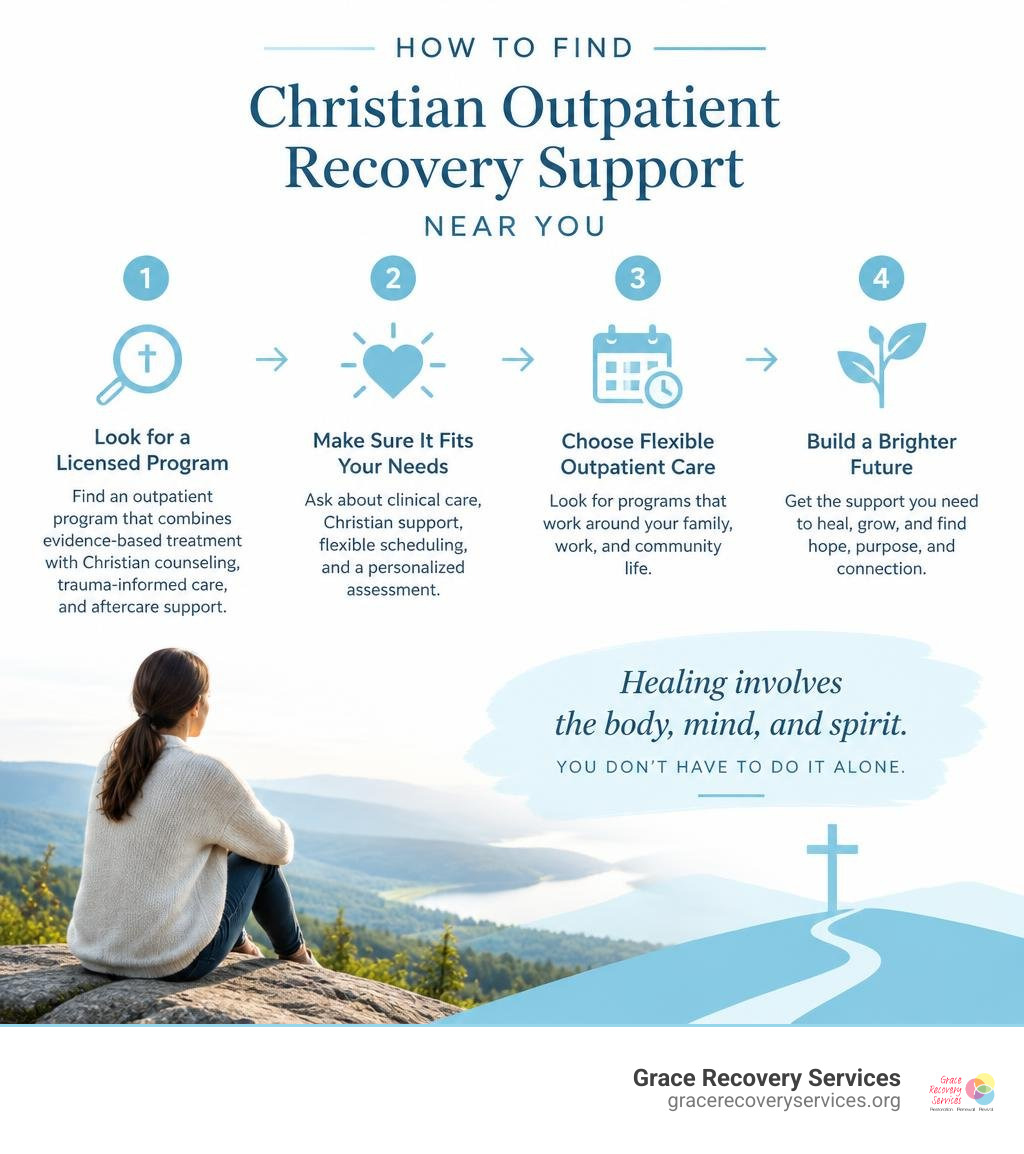
If you are searching for christian based rehabs near me, start by looking for licensed Christian recovery programs that combine evidence-based addiction treatment with Christian counseling, trauma-informed care, and clear aftercare support. In Western Pennsylvania, Grace Recovery Services offers comprehensive faith based recovery options, including partial hospitalization programs (PHP), intensive outpatient programs (IOP), and continuing support.
The right program should respect your story while helping you build practical recovery skills for daily life. When evaluating local Christian rehab centers, ask whether they provide:
- Licensed clinical care for substance use and co-occurring mental health concerns
- Christian counseling, prayer, and biblical support that fit your comfort level
- Flexible outpatient care that works around family, work, and community life
- A personalized assessment to help identify the level of support you need
At Grace Recovery Services, we believe healing can involve the body, mind, and spirit. Faith can offer hope, purpose, and connection, while clinical therapies help clients understand patterns, cope with stress, and move forward with support. You do not have to face this process alone.
Integrating Clinical Science with Christian Faith
When facing substance use disorder, many individuals find that standard medical care alone leaves a spiritual void, while spiritual encouragement without clinical support may fail to resolve underlying psychological wounds. True wholeness requires a balanced bridge between clinical science and Christian faith.
Research indicates that approximately 73% of addiction treatment programs across the United States incorporate spirituality-based elements. Furthermore, individuals with strong religious or spiritual beliefs are up to eight times less likely to experience illicit drug use. Integrating spiritual guidance with professional therapy addresses the neurological, psychological, and relational drivers of substance use while grounding the individual in unconditional grace.
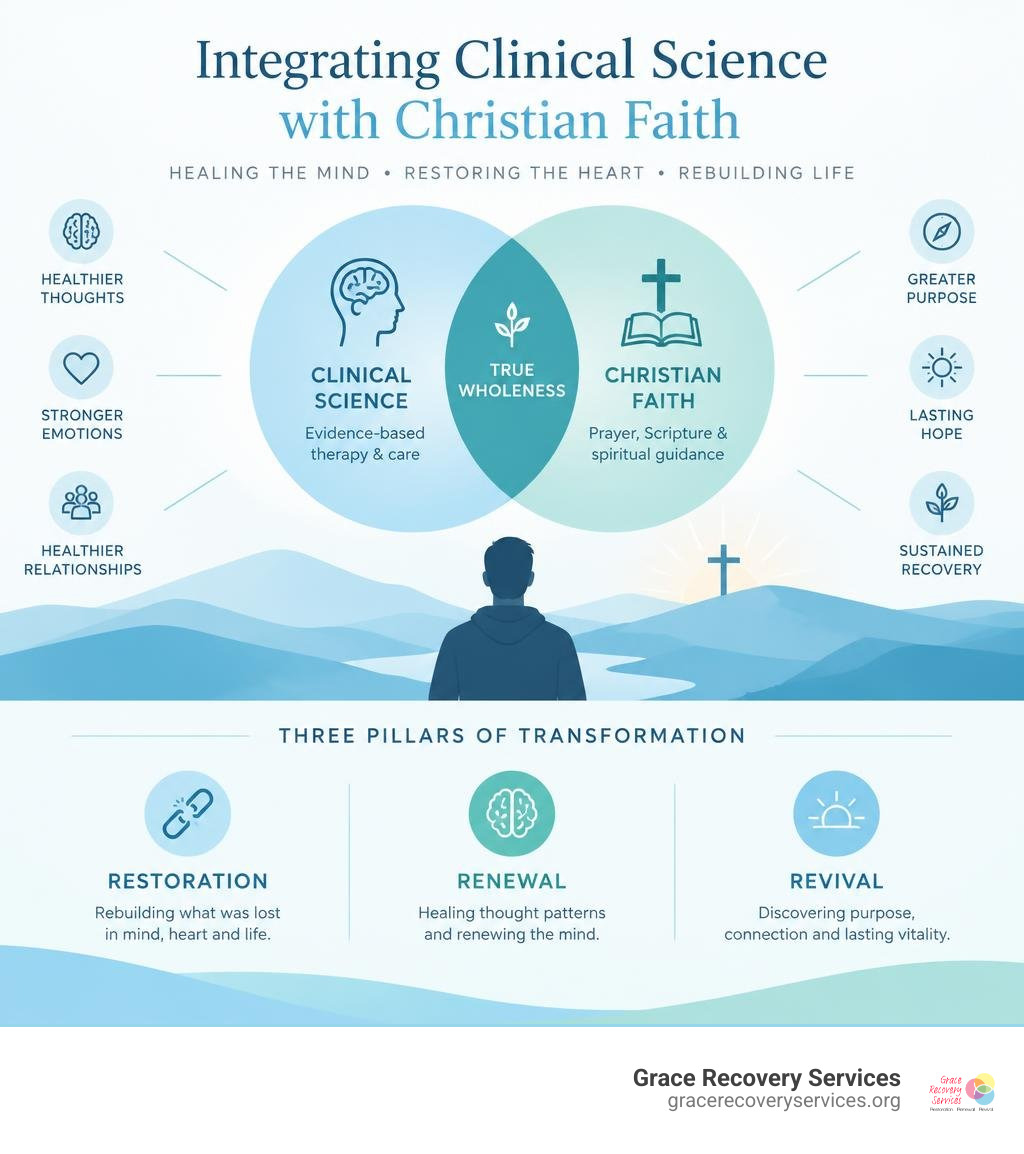
At Grace Recovery Services, we understand that addiction often stems from unresolved trauma, unmet attachment needs, and deep emotional pain. By integrating scripture with clinical therapy, we help clients navigate dual diagnosis challenges—such as co-occurring anxiety, depression, or PTSD—alongside their substance use recovery. We walk alongside our clients through three core pillars of transformation:
- Restoration: Rebuilding what substance use disorder has broken in emotional health, relationships, and daily functioning.
- Renewal: Reframing thought patterns, healing relational wounds, and renewing the mind through evidence-based cognitive interventions and biblical truth.
- Revival: Igniting a vibrant sense of purpose, spiritual connection, and long-term vitality in everyday life.
How Faith-Based Treatment Supports Recovery
A Christ-centered framework reframes recovery from a posture of shame into one of profound redemption. Rather than viewing oneself through the lens of past mistakes or a diagnosis, clients are reminded of their inherent worth and identity in Christ.
Clinical therapy provides the behavioral tools to manage cravings, regulate emotions, and identify triggers. Simultaneously, faith provides the deeper “why”—a lasting source of hope, ultimate accountability, and the assurance that you are loved unconditionally.
Our clinical model relies heavily on our structured four-stage healing framework, known as the Counseling Blueprint:
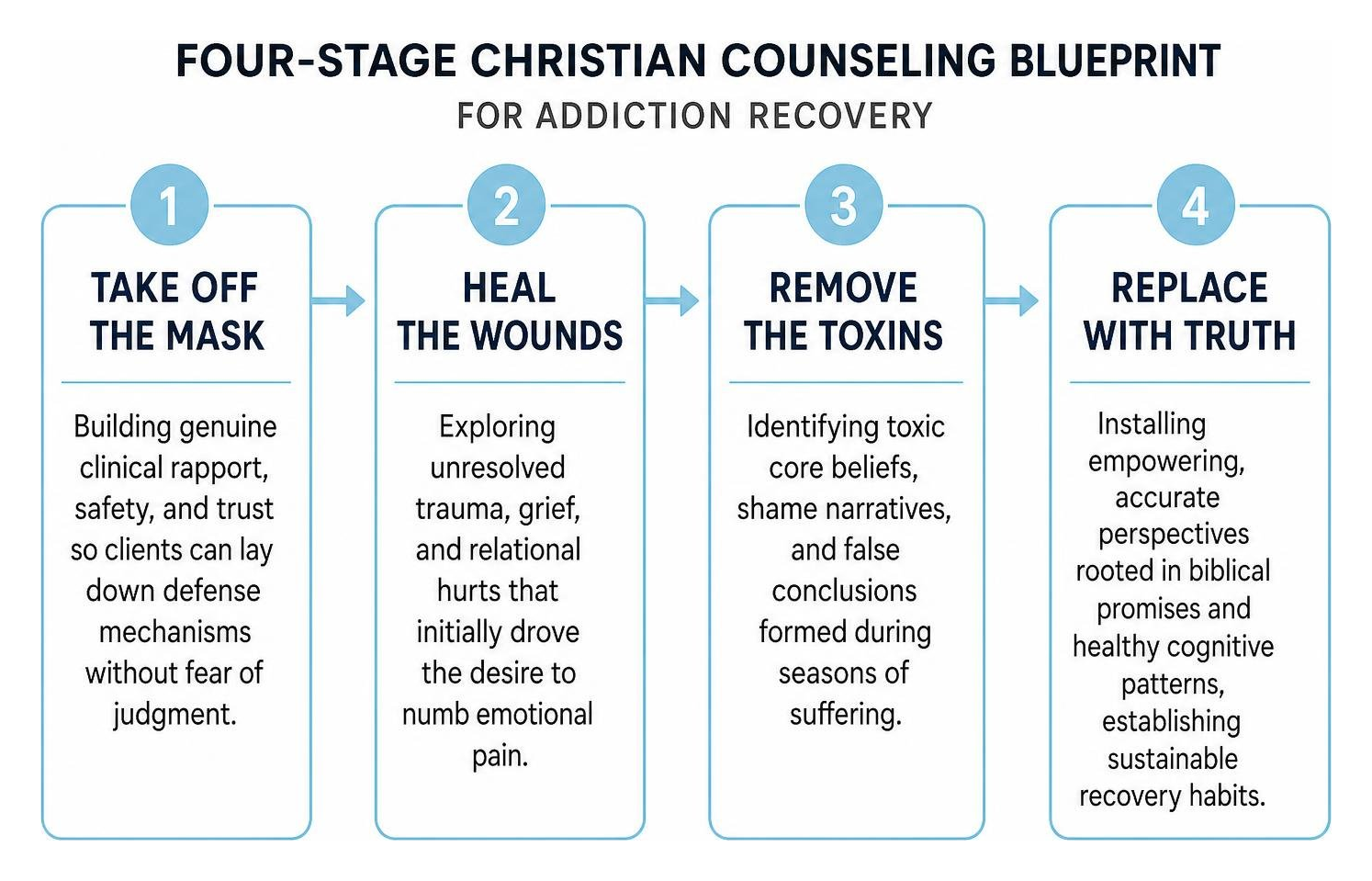
- Take Off the Mask: Building genuine clinical rapport, safety, and trust so clients can lay down defense mechanisms without fear of judgment.
- Heal the Wounds: Exploring unresolved trauma, grief, and relational hurts that initially drove the desire to numb emotional pain.
- Remove the Toxins: Identifying toxic core beliefs, shame narratives, and false conclusions formed during seasons of suffering.
- Replace with Truth: Installing empowering, accurate perspectives rooted in biblical promises and healthy cognitive patterns, establishing sustainable recovery habits.
The Spiritual Dimension of Addiction Recovery
Addiction is rarely just a physical or psychological issue; it deeply impacts the spiritual self, often leading to profound isolation, guilt, and existential despair. Reconnecting spiritually helps individuals process guilt and replace shame with grace.
Daily practices such as prayer, guided biblical reflection, and healthy fellowship allow clients to experience spiritual renewal. Exploring Christian holistic rehab options ensures that recovery nurtures the nervous system, calms the mind, and anchors the soul. By taking an honest, compassionate inventory of one’s life, individuals learn to forgive themselves, seek healthy reconciliation with loved ones, and experience peace.
How to Evaluate Christian Based Rehabs Near Me
Finding the right treatment provider requires looking beyond marketing claims to evaluate clinical integrity, licensure, and therapeutic approaches. Whether you are seeking care in Pittsburgh, Penn Hills, North Huntingdon, or across Westmoreland County, finding a high-quality outpatient provider ensures you receive safe, ethical, and clinically sound treatment.

When reviewing local faith-based programs, keep these critical benchmarks in mind:
- State Licensing and Credentials: Confirm that the facility is fully licensed by state behavioral health departments and employs master’s-level Licensed Professional Counselors (LPCs), Licensed Clinical Social Workers (LCSWs), and certified addiction specialists.
- Evidence-Based Integration: Ensure the center pairs Christian counseling with proven therapeutic modalities such as Cognitive Behavioral Therapy (CBT), Dialectical Behavior Therapy (DBT), and Eye Movement Desensitization and Reprocessing (EMDR).
- Trauma-Informed Framework: Programs must prioritize emotional safety, recognizing how nervous system dysregulation and past trauma fuel addictive behaviors.
- Transparent Philosophy: The program should welcome honest questions, respect your personal spiritual pace, and never use shame, coercion, or rigid dogma in place of compassionate clinical care, aligning with a practical faith-based recovery model.
Finding Christian Based Rehabs Near Me for Flexible Outpatient Support
For many individuals, stepping away from work, parenting, or family commitments for extended treatment is neither feasible nor clinically necessary. Flexible outpatient programs provide rigorous, comprehensive care while allowing you to remain active in your daily life.
At Grace Recovery Services, our outpatient offerings include:
- Partial Hospitalization Programs (PHP): Structured, intensive clinical care during the day with the freedom to return home each evening.
- Intensive Outpatient Programs (IOP): Multi-day weekly group and individual therapy sessions tailored around career and family obligations.
- Standard Outpatient & Christian Counseling: Ongoing weekly or bi-weekly therapy to solidify coping skills and deepen relational healing.
Clients seeking Christian rehab in Pittsburgh benefit from staying rooted in their local community. Outpatient care allows you to immediately practice communication strategies, emotional regulation tools, and spiritual disciplines in your real-world environment while maintaining close support from your clinical team.
What to Look for in Program Accreditation and Clinical Staff
Quality care depends entirely on the expertise and heart of the clinical staff. Look for multidisciplinary teams that blend clinical licensing with pastoral sensitivity.
Therapists should hold recognized credentials in professional counseling, marriage and family therapy, or addiction treatment, backed by specific training in trauma-informed modalities. Comprehensive aftercare planning is equally vital; a reputable outpatient center will establish long-term relational support networks, local church connections, and relapse prevention strategies to ensure continued stability after formal treatment concludes.
Core Therapies in Christ-Centered Outpatient Recovery
Christ-centered outpatient recovery unites clinical therapies with spiritual growth. Rather than viewing faith and clinical psychology as competing approaches, we view them as complementary disciplines designed to bring restoration to the whole person.

Key therapeutic modalities used in our faith-based rehab options in Pittsburgh include:
- Cognitive Behavioral Therapy (CBT): Uncovering distorted thinking patterns and automatic negative thoughts, evaluating them against evidence and biblical truth to transform emotional reactions and behaviors.
- Dialectical Behavior Therapy (DBT): Developing distress tolerance, emotional regulation, and interpersonal effectiveness skills to navigate difficult cravings and life stress.
- Trauma Resolution and EMDR: Processing traumatic memories safely, reducing physiological triggers, and neutralizing emotional pain connected to past wounds.
- Family Systems Counseling: Addressing relational dynamics, healing intergenerational wounds, and re-establishing healthy boundaries among loved ones.
Christ-Centered 12-Step Integration
The traditional 12-step model has supported millions on their recovery journeys. Originally influenced by Christian principles, its steps emphasize surrender, personal inventory, restitution, and reliance on a Higher Power.
In a Christ-centered outpatient setting, the “Higher Power” is clearly identified as the loving, personal God of the Bible. Clients explore:
- Surrendering the illusion of control to a compassionate Savior.
- Conducting fearless moral inventories covered by grace rather than condemnation.
- Seeking forgiveness and making amends to restore broken relationships.
- Building authentic fellowship with accountability partners who share similar spiritual values.
Holistic and Trauma-Informed Therapies
Lasting recovery involves healing the physical body alongside the mind and spirit. Trauma and chronic stress often leave the nervous system locked in chronic fight, flight, or freeze responses.
Our outpatient treatment integrates nervous system regulation techniques, mindfulness grounded in scripture, breathwork, and healthy lifestyle planning. Combining somatic awareness with pastoral encouragement helps clients find physiological peace as they rebuild their lives.
Understanding Insurance and Payment for Faith-Based Care
Navigating payment for addiction treatment can feel overwhelming, but professional outpatient treatment is widely supported by health insurance providers. Because licensed faith-based outpatient facilities deliver accredited clinical care, most private insurance plans offer partial or complete coverage for PHP, IOP, and individual counseling services.
Outpatient Coverage Options and Verification Steps
| Coverage Step | Description | Action Item |
|---|---|---|
| 1. Insurance Verification | Confirming your behavioral health and addiction treatment benefits with your provider. | Contact our intake team with your insurance card to determine in-network or out-of-network benefits. |
| 2. Deductible & Copay Review | Identifying any out-of-pocket amounts before insurance begins cost-sharing. | Review your annual deductible status to estimate session copayments. |
| 3. Level of Care Authorization | Matching clinical assessment recommendations (PHP, IOP, OP) to medical necessity criteria. | Complete an initial clinical intake assessment to verify appropriate care levels. |
| 4. Flexible Payment Planning | Establishing accessible payment arrangements for non-covered expenses or self-pay options. | Learn about affordable faith-based treatment options to ensure financial peace of mind. |
Our administrative team works directly with insurance companies to verify benefits, handle authorizations, and minimize unexpected out-of-pocket costs, allowing you to focus on your recovery.
Frequently Asked Questions About Christian Rehab Programs
Do I Need to Be Religious to Attend Christian Based Rehabs Near Me?
No. While our programs are rooted in Christian principles and biblical truth, we warmly welcome individuals from all religious backgrounds, as well as those who are unsure about what they believe. We meet every client with unconditional love, dignity, and respect. You will never experience coercion or pressure; we provide a safe space where you can explore spiritual questions at your own pace while receiving evidence-based clinical therapy.
How Effective Are Faith-Integrated Treatment Programs?
Research demonstrates that faith-integrated addiction treatment is highly effective. Studies consistently show that individuals who experience spiritual growth and develop positive coping habits during treatment tend to maintain their recovery longer, reporting higher life satisfaction, stronger social support, and reduced relapse rates. Because every person’s journey is unique, we encourage you to contact Grace Recovery Services for a personalized assessment to explore how faith-integrated care can support your specific needs.
How Do I Know If Outpatient Care Is the Right Level of Support?
Outpatient care (including PHP and IOP) is an excellent fit for individuals who are medically stable, do not require 24/7 medical detoxification, and want to maintain family, school, or work commitments while receiving structured clinical therapy. A comprehensive clinical assessment with our intake team helps determine the precise level of care required to support your safety, psychological health, and long-term recovery goals.
Conclusion
Recovery is not simply about stopping substance use—it is about restoring your life, renewing your mind, and reviving your spirit. Through compassionate, trauma-informed clinical care and the life-giving truth of Christian faith, lasting freedom is possible.
At Grace Recovery Services, we walk alongside individuals and families across Western Pennsylvania—including Pittsburgh, Penn Hills, Irwin, and North Huntingdon—providing professional outpatient therapy, intensive outpatient programs (IOP), and partial hospitalization programs (PHP).
If you or a loved one is ready to begin the journey toward healing, we invite you to take the first step. Contact our compassionate team today for a confidential, personalized assessment, and explore our full range of outpatient addiction recovery services designed to help you thrive in mind, body, and spirit.
This article was researched with AI and heavily edited by Stephen Luther for accuracy and relevance.
Stephen Luther is the Executive Director and Founder of Grace Christian Counseling, Grace Recovery Services, WPA Counseling, NuWell Online Counseling and Coaching, and NuWell Health. He holds a Master’s degree in Education from the University of Georgia and a Master’s degree in Marriage and Family Therapy from Duquesne University. He is a licensed professional counselor in Pennsylvania.
Since 1997, Steve has been helping children, adolescents, and adults overcome a wide range of emotional and relational challenges. He specializes in working with hurting families, including those with foster, adopted, or traumatized children. Steve uses Attachment-Based Therapy, Splankna Healing, and Therapeutic Parent Coaching to support healing and restoration.
This guide is for educational and spiritual encouragement and is not a substitute for personalized professional counseling. If you are in crisis, please reach out for immediate help.