
What a Faith Based IOP Offers for Whole-Person Healing
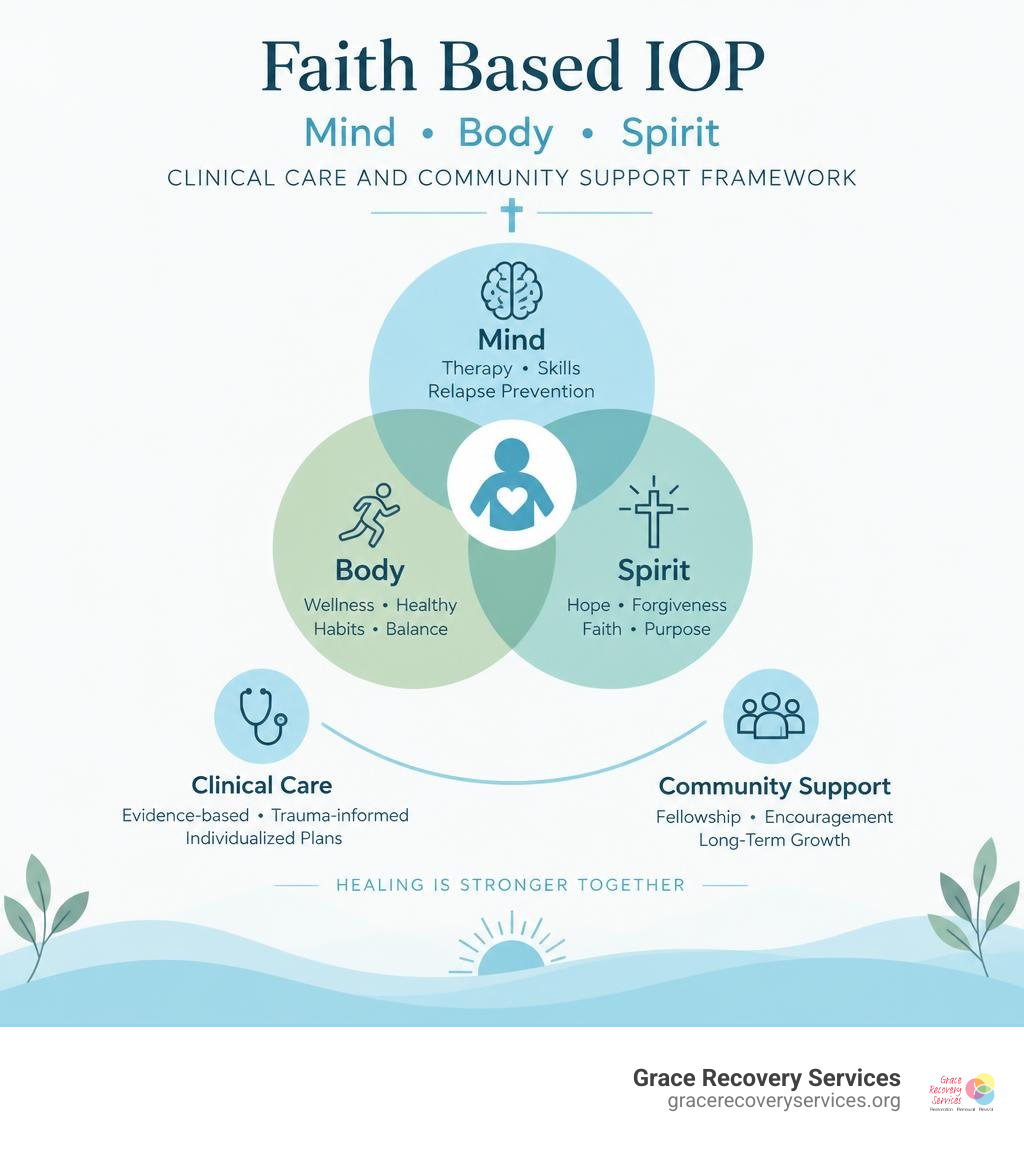
A faith based IOP is an intensive outpatient program that combines structured addiction treatment with Christian spiritual support. Clients attend scheduled therapy and recovery sessions while continuing to live at home and manage daily responsibilities. At Grace Recovery Services, we integrate evidence-based, trauma-informed care with Christian counseling, prayer, Scripture reflection, and supportive fellowship when those practices fit a client’s goals.
This approach can support healing across the mind, body, and spirit. Clinical therapy helps clients build practical coping and relapse-prevention skills. Faith can offer hope, meaning, forgiveness, and connection during a difficult season. For a broader look at how this model works, the Substance Abuse and Mental Health Services Administration provides helpful information on outpatient treatment options.
A strong program should not ask clients to choose between professional care and spiritual guidance. It should provide both, respectfully and without pressure. For individuals and families in Pittsburgh and Western Pennsylvania, our outpatient programs are designed to offer consistent structure, compassionate support, and room to practice recovery in everyday life.
If you are considering care, look for an IOP that is clinically grounded, clear about how faith is included, and willing to create an individualized plan. Our team can help you explore whether a faith-integrated outpatient program is a good fit through a personalized assessment.
Know your faith based iop terms:
Understanding How a Faith Based IOP Integrates Clinical Care and Spirituality

When someone experiences a substance use disorder or co-occurring mental health challenges, healing rarely happens in a vacuum. It touches every area of life—emotional regulation, physical vitality, thought patterns, family relationships, and personal faith. In Christian intensive outpatient treatment, we bring together the rigor of licensed clinical psychology and the timeless comfort of biblical wisdom.
Unlike standard secular outpatient programs that may overlook the transcendent aspects of recovery, or church support groups that lack clinical licenses, a dedicated faith-centered outpatient model unites both under one roof. Our outpatient flexibility means you do not have to leave your job, pause your family responsibilities, or relocate. You live at home, step into our centers in the Pittsburgh area—such as Penn Hills or North Huntingdon—for focused clinical and spiritual support, and apply those transformative principles in real time.
Core Clinical Components of a Faith Based IOP
Clinical excellence is the bedrock of any reputable intensive outpatient track. Our guide to intensive outpatient programs highlights that intensive outpatient care requires structured, evidence-based interventions tailored to meet measurable treatment goals.
At Grace Recovery Services, our clinical toolbox includes:
- Cognitive Behavioral Therapy (CBT): Identifying automatic negative thoughts and behavioral loops that drive chemical use.
- Dialectical Behavior Therapy (DBT) Skills: Fostering emotional regulation, distress tolerance, and healthy interpersonal boundaries.
- Trauma-Informed Care: Ensuring the recovery space is safe, gentle, and paced appropriately, acknowledging that unresolved relational hurts often underpin addictive cycles.
- Dual-Diagnosis Support: Simultaneously addressing mood disorders, anxiety, or post-traumatic stress alongside substance use disorders.
- Group and Individual Counseling: Providing personalized individual sessions alongside dynamic group work where shared experiences foster collective growth.
To give our clients a clear roadmap for lasting transformation, we organize our therapeutic process through a structured framework we call the Counseling Blueprint.
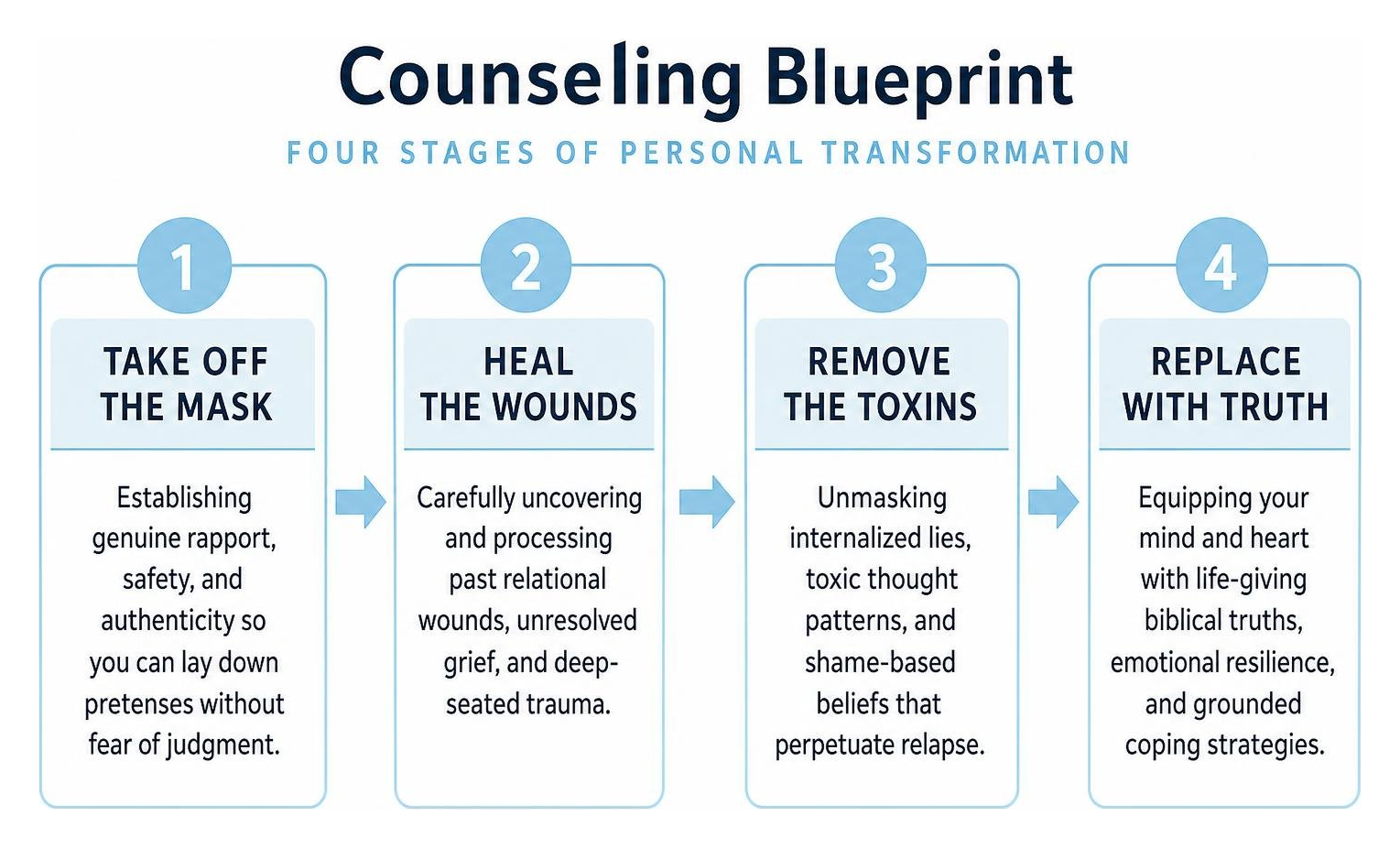
This blueprint moves sequentially through four compassionate stages:
- Take Off the Mask: Establishing genuine rapport, safety, and authenticity so you can lay down pretenses without fear of judgment.
- Heal the Wounds: Carefully uncovering and processing past relational wounds, unresolved grief, and deep-seated trauma.
- Remove the Toxins: Unmasking internalized lies, toxic thought patterns, and shame-based beliefs that perpetuate relapse.
- Replace with Truth: Equipping your mind and heart with life-giving biblical truths, emotional resilience, and grounded coping strategies.
Incorporating Scripture, Prayer, and Pastoral Support
While licensed clinical therapists guide emotional processing, our faith integration introduces spiritual practices that restore hope. In faith-based outpatient addiction treatment, spiritual disciplines are not used as simplistic bandaids. We do not tell someone to “just pray it away.” Instead, spiritual modalities serve as vital anchors alongside clinical techniques.
Scripture reflection allows clients to rediscover their core identity outside of addiction. Verses emphasizing grace, redemption, and adoption into God’s family dismantle feelings of worthlessness. Prayer circles offer a safe space to lay burdens down collaboratively, while pastoral and Christian counseling support clients through complex theological questions, spiritual disillusionment, and the rebuilding of moral foundations.
The Holistic Advantages of Faith-Centered Addiction Recovery

Holistic recovery means treating the whole person. When addiction takes hold, it isolates the soul, dysregulates the nervous system, and breaks relational trust. Integrating faith with trauma-informed clinical care creates a secure environment where clients can experience genuine Restoration, Renewal, and Revival.
Our Christian trauma-informed IOP programs focus directly on this union, acknowledging that safety and trust are essential precursors to vulnerable personal exploration.
Nurturing Spiritual Resilience and Emotional Healing
One of the heaviest obstacles in recovery is toxic shame—the internalized belief that one is fundamentally broken or unworthy of love. Secular approaches work diligently to reframe thoughts, but faith-centered care goes deeper by replacing shame with divine grace.
As detailed in our faith-based IOP guide to healing, understanding God’s unconditional love allows clients to:
- Release self-condemnation and embrace personal forgiveness.
- Cultivate authentic spiritual resilience to face life stressors without returning to substances.
- Rediscover vocational purpose and personal meaning beyond the identity of addiction.
- Rebuild fractured family dynamics with humility, patience, and biblical conflict-resolution principles.
Addressing Potential Challenges and Navigating Diverse Beliefs
A meaningful faith-based program must navigate the diverse spiritual backgrounds of every individual who walks through the door. Some individuals arrive with deep spiritual trauma or past experiences in legalistic environments where religion was used to control or shame them.
We approach every client with absolute dignity and respect. Our clinicians meet you where you are. Whether you possess an active faith, have intense doubts, or are simply curious about the spiritual dimensions of recovery, our care is tailored to your comfort level. We never coerce, pressure, or shame. Clinical care is always delivered to the highest professional standards, ensuring that everyone receives compassionate, evidence-based attention.
The Vital Role of Community and Fellowship in Long-Term Sobriety
Addiction thrives in secrecy and isolation; recovery flourishes in authentic community. When you participate in an intensive outpatient environment, building a sober network rooted in shared values is essential for sustainable progress.
| Dimension | Standard Peer Support | Faith-Based IOP Fellowship |
|---|---|---|
| Foundation | Shared sobriety goals | Shared recovery goals & spiritual grounding |
| Community Tie | Support meeting rooms | Local church networks, mentors, & faith groups |
| Core Perspective | Self-reliance & coping skills | Surrender, divine grace, & personal empowerment |
| Relational Focus | Group camaraderie | Deep fellowship, reconciliation, & selfless service |
| Ongoing Anchors | 12-Step fellowships | Integration of clinical tools, Scripture, & congregational life |
Building Peer Support Through Church and Recovery Groups
In our Christian IOP programs in Penn Hills and across Western Pennsylvania, we encourage clients to build healthy roots within safe local faith communities.
When clients engage with church groups, faith-based 12-step programs, or Christian support circles, they gain:
- Mentors who walk alongside them with encouragement and practical wisdom.
- Sober social events that prove life in recovery can be joyful and engaging.
- A wider safety net of families and peers who understand the power of redemptive healing.
Maintaining Accountability in Outpatient Life
Because an IOP does not remove you from your everyday living environment, accountability is vital. Clients return home each evening, which gives them the immediate opportunity to practice relapse prevention skills within their actual life routines.
Our clinicians work with clients to develop daily structure: establishing consistent sleep habits, setting healthy boundaries with old acquaintances, engaging in regular spiritual devotion, and involving loved ones in supportive family sessions. This balance bridges the gap between clinical insight and real-world execution.
Deciding on the Right Path for Your Recovery Journey
Choosing the right treatment program is an important personal step. If you are exploring your options, our guide on finding faith-based IOP options can help clarify what elements to look for in a quality treatment facility.
Key Considerations When Choosing a Faith Based IOP
When researching programs in the Pittsburgh and Westmoreland County areas, consider these critical elements to ensure you receive ethical, top-tier care:
- Clinical Licensing and Accreditation: Ensure all therapists are fully licensed mental health and addiction professionals who use evidence-based modalities.
- Balanced Integration: Confirm that the curriculum balances clinical psychology and spiritual care without leaning into harmful extremes.
- Trauma-Informed Focus: Make sure the staff is trained to understand the profound relationship between relational trauma and substance use.
- Reputation and Reviews: Review local resources such as our breakdown of the best Pittsburgh IOP programs to understand how different facilities structure their care.
Evaluating Outpatient Commitment and Daily Flexibility
An IOP requires commitment, but it is structured to fit around your daily life. Before enrolling, it helps to understand key IOP program requirements and explore our beginner guide to IOP programs.
Outpatient schedules typically involve attending group and individual therapy sessions several days per week for a few hours at a time. This structure provides intensive clinical intervention while allowing you to maintain employment, attend school, and care for your family at home.
Frequently Asked Questions About Faith-Based IOP
How does faith-based care balance clinical therapy with spiritual guidance?
Faith-based care uses licensed professional counselors who practice proven, evidence-based methods such as Cognitive Behavioral Therapy, DBT skills, and trauma processing. Our team weaves in biblical principles, prayer, and pastoral reflections to support emotional themes like grace, forgiveness, and hope, ensuring neither clinical excellence nor spiritual depth is compromised.
Can someone participate if they have religious doubts or a different background?
Yes. Quality faith-based programs honor every individual’s unique story and autonomy. You will never encounter pressure, legalism, or forced conformity. We create a compassionate, non-judgmental environment where clients can openly process doubts, past spiritual hurts, or questions at their own pace.
How does an intensive outpatient schedule accommodate work and family?
Because an intensive outpatient program is strictly outpatient, sessions are scheduled during specific blocks throughout the week. This allows clients to sleep in their own beds, maintain family connections, and continue fulfilling work or educational duties while receiving intensive clinical and spiritual care.
Conclusion
Recovery is not merely about stopping the use of a substance; it is about uncovering your true identity, healing relational hurts, and stepping into a life of purpose, peace, and spiritual vitality. By uniting trauma-informed clinical therapy with the enduring hope of the Gospel, you can experience a complete transformation of mind, body, and spirit.
At Grace Recovery Services, our dedicated team is here to walk alongside you or your loved one through every step of this journey. To learn more about our faith-centered treatment options or to schedule a confidential assessment, explore our comprehensive outpatient program and take the first step toward lasting renewal today.
This article was researched with AI and heavily edited by Stephen Luther for accuracy and relevance.
Stephen Luther is the Executive Director and Founder of Grace Christian Counseling, Grace Recovery Services, WPA Counseling, NuWell Online Counseling and Coaching, and NuWell Health. He holds a Master’s degree in Education from the University of Georgia and a Master’s degree in Marriage and Family Therapy from Duquesne University. He is a licensed professional counselor in Pennsylvania.
Since 1997, Steve has been helping children, adolescents, and adults overcome a wide range of emotional and relational challenges. He specializes in working with hurting families, including those with foster, adopted, or traumatized children. Steve uses Attachment-Based Therapy, Splankna Healing, and Therapeutic Parent Coaching to support healing and restoration.
This guide is for educational and spiritual encouragement and is not a substitute for personalized professional counseling. If you are in crisis, please reach out for immediate help.